
It starts quietly. A friend posts a photo of their new home—a wooden cabin surrounded by trees, sunlight slipping through the branches. Another friend mentions they’ve traded subway commutes for morning walks by the lake. Before long, you notice a pattern: people are leaving the cities they once fought to live in.
This isn’t just a temporary pandemic aftereffect. It’s becoming a long-term movement—a cultural and emotional migration away from urban chaos toward something slower, quieter, and arguably more human.
When I moved to a big city in my twenties, it felt like stepping into the center of everything. There was an energy, a pulse—people chasing dreams, neon lights promising endless opportunity. You could order dinner at midnight, meet strangers from anywhere, and feel the constant hum of ambition in the air.
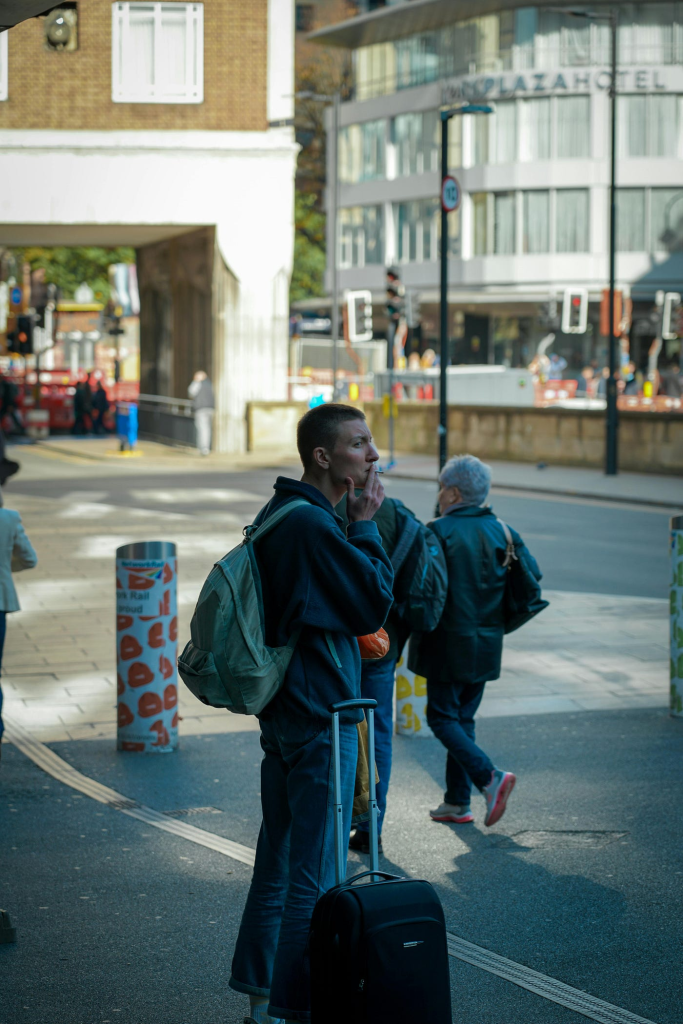
But over time, that pulse started to feel like static. The rent crept higher, the commutes longer, the noise unrelenting. Weekends became a recovery mission instead of a reset. The city that once symbolized possibility began to feel like an endurance test.
And it turns out, I wasn’t alone.
A Movement Without Slogans
There’s no manifesto or hashtag for what’s happening, but you can see it in data and anecdotes alike. Across Europe, North America, and parts of Asia, small towns and rural communities are seeing population increases for the first time in decades.
People are rethinking what “a good life” means. For some, it’s economic—the cost of living in major cities has simply become unsustainable. For others, it’s psychological: the constant noise, social competition, and digital saturation have left them craving silence and space.
A recent global study found that over 60% of young professionals would consider relocating to smaller towns if remote work remained possible. That number was unthinkable ten years ago.
But beyond economics and convenience, there’s something deeper driving this migration: the search for belonging.
Relearning What Community Feels Like
In the city, we live among millions of people but often know no one. Eye contact on the subway feels like a small act of rebellion. Friendships are scheduled between meetings, and genuine connection is a rare luxury.
In smaller places, community isn’t something you have to “build”—it’s something you step into. Neighbors share tools, exchange food, check in unprompted. There’s less anonymity and more accountability, which can feel both grounding and unfamiliar.
A friend who moved from Brooklyn to a lakeside town told me, “At first, I missed the chaos. But now, I miss nothing. My neighbors bring me vegetables; I know the barista’s dog’s name. It feels like life has texture again.”
It’s not romanticizing the countryside—it’s realizing that slowness can be its own kind of wealth.
The Digital Nomad Was Just the Beginning
Before this shift, we celebrated the “digital nomad”—the laptop-toting wanderer chasing freedom across Bali, Lisbon, or Chiang Mai. But this new wave of movers is different. They’re not chasing freedom; they’re chasing balance.
They don’t want to live out of backpacks or Airbnb listings. They want roots, just not the urban kind.
Technology, ironically, has made this possible. Remote work and online communities allow people to stay connected while living outside traditional economic centers. It’s a paradox: the very digital tools that made cities feel overwhelming are now the ones enabling people to escape them.
The Myth of Missing Out
One of the hardest parts of leaving a big city is confronting the myth of missing out—the idea that you’ll lose access to culture, opportunity, and excitement.
But when you talk to those who’ve left, you hear a different story. They describe a kind of emotional decluttering. Without constant stimulation, priorities shift. They rediscover hobbies, relationships, and even boredom—a word that’s starting to sound refreshing again.
There’s a freedom in realizing that happiness doesn’t require constant newness. Sometimes, it’s found in repetition—the morning walk, the familiar faces, the sound of birds instead of sirens.
My Thoughts
When I visited a friend who had moved to a small mountain town, I noticed something strange: silence isn’t really silent. It’s full of small sounds you only hear when you slow down—the wind, footsteps on gravel, the faint creak of trees.
That visit made me rethink my own attachment to cities. I used to see them as the only places where life truly happened. But maybe the opposite is true. Maybe cities amplify life so loudly that we forget how to listen to it.
The new migration isn’t about rejecting progress; it’s about redefining it. People are not running away from cities—they’re walking toward themselves.
The Future Isn’t Urban or Rural—it’s Personal
So where does this leave us? Cities will always have their magnetism—the energy, the culture, the chaos. But for the first time in modern history, people have a choice.
Technology no longer chains us to geography. We can design our own rhythms. The future of living might not be about where we are, but how we live—how we choose to spend our attention, our time, our silence.
Perhaps that’s the quiet revolution happening right now: a generation learning that success doesn’t always come with noise. Sometimes, it whispers.