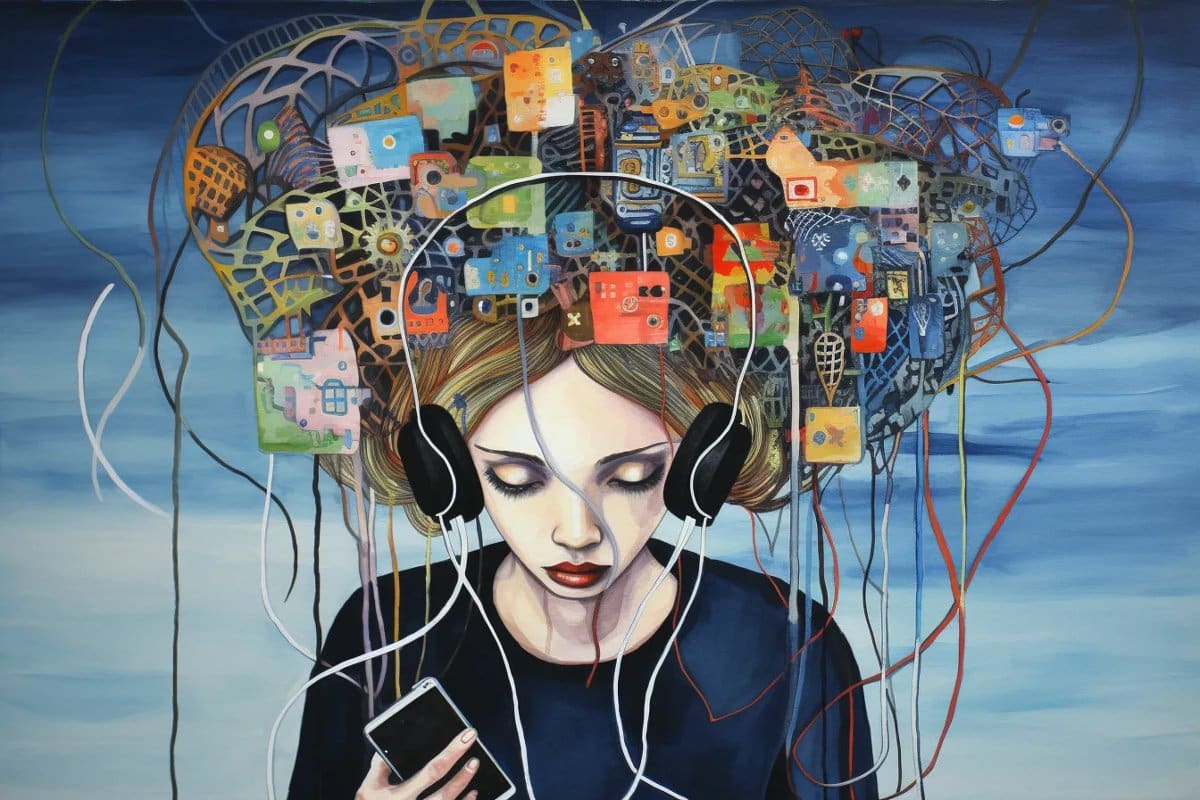
A New Kind of Isolation
It’s a strange feeling—to be surrounded by voices, messages, and notifications, yet still feel like no one is really there.
Modern loneliness doesn’t look like the quiet figure sitting alone at a café anymore. It looks like someone scrolling through a feed at midnight, half-smiling at a meme, half-hoping for a message that never comes.
Technology promised us connection. It delivered communication, yes—but not always community.
And that gap, that subtle absence of real closeness, is where digital loneliness quietly grows.
The Paradox of Constant Connection
The average person spends more than seven hours a day online. We talk more, post more, share more—but somehow, we feel less.
Why? Because what we’ve built is an architecture of contact, not connection.
Scrolling through updates gives the illusion of intimacy. You see someone’s life unfold in fragments—birthdays, breakups, achievements—but never their silence.
The algorithm rewards visibility, not vulnerability.
We are more “reachable” than ever before, but rarely truly reached.
When Validation Replaces Belonging
The digital world has turned social feedback into a metric. Likes, comments, shares—each one a microdose of validation. But the moment the notifications stop, silence can feel like rejection.
This constant cycle of external affirmation subtly rewires our emotional baseline.
Our worth becomes contingent on response. Our self-concept becomes collective property.
I’ve noticed it in myself, too. That tiny hit of dopamine when someone reacts to a post. The faint anxiety when a message goes unanswered.
It’s not just vanity—it’s vulnerability disguised as performance.
In this way, loneliness in the digital age isn’t about the absence of others—it’s about the erosion of authenticity.
The Psychology of Digital Loneliness
Psychologists have a term for this disconnection: “ambient intimacy.”
It’s the feeling of being near people’s lives without actually being in them.
Our brains, however, don’t distinguish between physical and digital cues of social belonging. The result is a constant low-level stimulation—messages, alerts, endless updates—that leaves us exhausted rather than fulfilled.
Dr. Julianne Holt-Lunstad, one of the leading researchers on loneliness, compares chronic isolation to smoking fifteen cigarettes a day. But here’s the catch: digital loneliness doesn’t look like isolation. It looks like participation.
That’s what makes it so hard to recognize—and harder to fix.
A Generation Growing Up in the Echo Chamber
For younger generations, loneliness isn’t a symptom—it’s a starting point.
Many Gen Z adults report feeling isolated despite being the most “connected” demographic in history.
Online life is their public square, their social club, their mirror. But it’s also their pressure cooker.
Comparison culture, fear of missing out, digital surveillance of one’s own identity—it all contributes to what some psychologists call “hypervisibility fatigue.”
You’re visible to everyone, but truly known by no one.
Finding Stillness in the Noise

There’s no simple cure for digital loneliness, but there are quiet rebellions.
Start by noticing how often you reach for your phone not out of need, but out of nervous habit.
Try something radically simple: go for a walk without your device. Let boredom return. Let silence breathe again.
Human connection begins not in conversation, but in presence.
The moment you stop filling every pause with noise, you begin to feel what’s missing—and that’s where healing starts.
I sometimes leave my phone in another room when I read or cook. At first, it feels like something’s missing. Then, strangely, it feels like I’m coming back.
Redefining What It Means to Be Connected
Maybe the real challenge of this era isn’t learning to connect—but learning to disconnect intentionally.
To remind ourselves that friendship isn’t built through engagement rates, that attention is a form of care, that silence between two people can mean understanding, not absence.
We don’t need to reject technology—but we do need to reclaim it.
To use it with presence instead of addiction.
To remember that behind every glowing screen is a human being who, like you, is just trying to be seen.
Final Thought
The digital world gave us a thousand ways to speak—but very few ways to listen.
Maybe the future of mental health won’t come from another app or AI therapist, but from something far simpler: learning to be with one another again, quietly, without performance.
Because in that silence, connection finally sounds like what it was meant to be—human.