
Beyond the Buzzwords
Everywhere you look, “smart cities” are being marketed as the future.
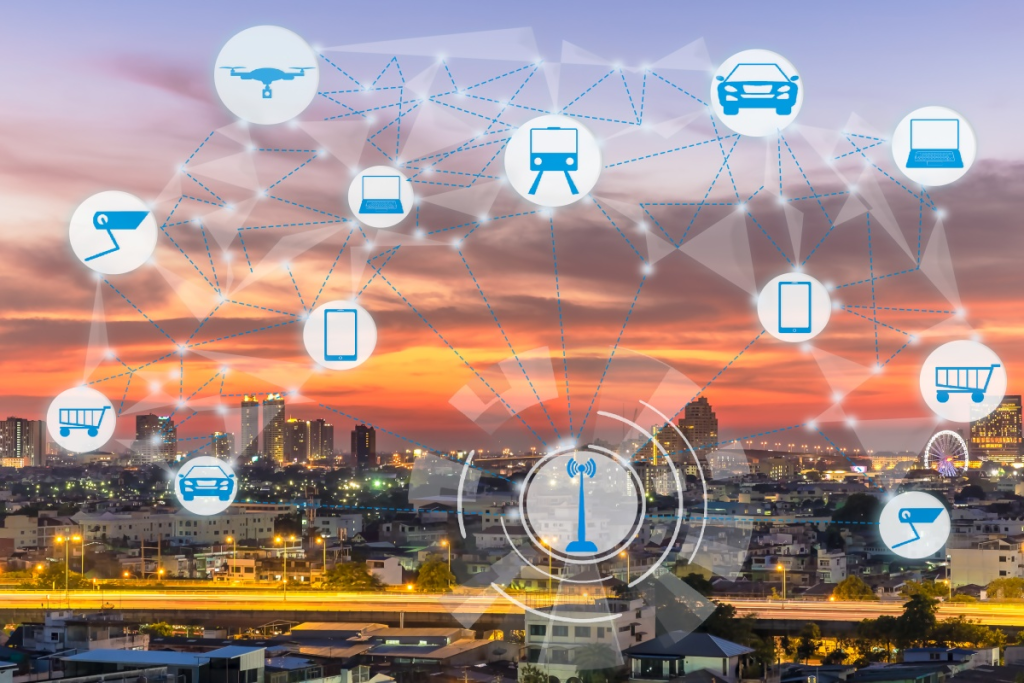
Sensors on lampposts, AI-managed traffic lights, autonomous buses, data dashboards predicting crime or pollution—it all sounds like science fiction made real.
But for city dwellers, the real question isn’t whether a city is smart—it’s whether it feels livable.
Technology may promise efficiency, but the human experience of a city is far messier than any algorithm can predict.
Let’s take a closer look at what it means to build cities where people—not just data—thrive.
The Data-Driven Cityscape
Sensors are everywhere: monitoring traffic congestion, air quality, energy consumption, and even noise levels. Governments claim these networks can optimize everything, from public transport to emergency services.
For example, in Barcelona, adaptive street lighting dims or brightens based on pedestrian presence, reducing energy costs while improving safety.
In Singapore, AI traffic signals can adjust in real-time, reducing commuter delays.
These examples demonstrate the promise of smart cities, but there’s a gap between efficiency and experience. Technology can tell us where congestion occurs, but it can’t tell us why people feel stressed waiting at a bus stop, or why a park feels unsafe after dark.
Humans in the Loop
A truly “smart” city considers not only sensors but also human behavior.
Take the story of Emma, a daily commuter in Seoul. Her city has AI-managed traffic lights and real-time subway tracking apps. Yet she often chooses to walk longer routes just to avoid crowded streets or poorly lit underpasses.
Data alone couldn’t predict Emma’s preferences—it takes understanding human psychology, safety perception, and habit.
Smart cities that ignore this human element risk becoming sterile, overly engineered environments. Efficiency metrics are meaningless if citizens don’t feel comfortable, safe, and engaged in their own neighborhoods.
Accessibility and Inclusion
Technology can bridge gaps—but only if implemented thoughtfully.
Consider autonomous shuttles: they promise mobility for seniors and people with disabilities. In Helsinki, pilot programs have shown impressive adoption rates among older adults—but only after extensive human-centered design workshops. The vehicles were adapted to handle walkers, wheelchairs, and even guide dogs.
The lesson is clear: innovation isn’t just about new gadgets—it’s about equitable design. Smart cities that neglect inclusivity may amplify social divides instead of closing them.
Privacy and Trust
With sensors capturing so much personal data, privacy is a central concern.
Imagine an AI system predicting crime hotspots. The city may reduce incidents, but how do residents feel knowing their movements are tracked constantly? Can predictive policing unintentionally reinforce bias?
Cities like Amsterdam and Toronto are experimenting with data transparency portals, letting residents see what data is collected, how it’s used, and giving them control over sharing preferences.
Trust, it turns out, is as critical to a city’s success as its technology stack.
The Role of Culture and Community
Technology cannot substitute for culture, community, or spontaneous human interaction.
Smart city initiatives that ignore public spaces, art, local markets, and social networks risk creating efficient yet soulless environments.
Take Medellín, Colombia—a city transformed not only with escalators and cable cars for mobility, but also through libraries, murals, and community centers. Technology improved infrastructure, but the human-centered urban planning created vibrancy and safety.
A lesson emerges: technology is a tool, not the driver. Cities are fundamentally social spaces, and the smartest cities prioritize people first.
My Thoughts: Balancing Hype and Reality
I’ve walked streets where digital dashboards promise efficiency, yet the rhythm of life feels chaotic.
The future of urban living isn’t about smart lampposts or automated buses—it’s about whether technology supports human behavior, not replaces it.
A city that is both smart and human-centered integrates AI, sensors, and connectivity while maintaining flexibility, accessibility, and cultural identity.
In other words, a city isn’t smart because of data—it’s smart because the data makes life better.
The Future: Cities That Learn From Us
Looking ahead, cities may become adaptive ecosystems.
Real-time feedback loops could adjust traffic, energy, and public services according to actual human behavior.
Community engagement platforms may allow residents to shape their neighborhoods dynamically, while AI highlights potential improvements before they become crises.
The key principle? Technology should serve the people, not the other way around.
Smart cities will succeed not when they are the most efficient, but when they are the most empathetic.
And in a world where urbanization is accelerating, creating spaces where humans thrive—and not just survive—will define the cities of tomorrow.