Introduction: The Quantum Leap
For decades, computing has been driven by the binary system—1s and 0s. But what if there were a way to break free from these limitations? Enter quantum computing, a field that promises to revolutionize everything we know about technology, from data encryption to artificial intelligence (AI). Although it may sound like something straight out of a sci-fi movie, quantum computing is quickly becoming a reality. In this article, we’ll explore what quantum computing is, how it works, and why it could be the game-changer of the next technological era.
1. What Is Quantum Computing? A Brief Primer
At its core, quantum computing is a type of computation that takes advantage of the weirdness of quantum mechanics—the branch of physics that governs the behavior of particles at a subatomic level. While classical computers use bits to represent data as either a 0 or a 1, quantum computers use qubits—quantum bits that can exist as 0, 1, or a superposition of both simultaneously.
This ability to be in multiple states at once allows quantum computers to process exponentially more data than classical computers. Imagine trying to solve a puzzle: A classical computer would go through each possibility one at a time, while a quantum computer can evaluate many possibilities at once, vastly speeding up the process.
While the technology is still in its early stages, the potential for quantum computing is immense. The real question is: how will quantum computers reshape industries and society as a whole?
2. The Applications of Quantum Computing: From Medicine to Security
The applications of quantum computing are as vast as the technology itself. One of the most exciting possibilities is its impact on drug discovery. Traditional computing struggles to simulate the interactions of molecules in the human body accurately, but quantum computers could simulate these complex interactions in real-time, leading to faster development of life-saving drugs and treatments.
In the field of cryptography, quantum computing could also make current encryption methods obsolete. Today’s encryption techniques rely on the fact that classical computers can’t easily factor large numbers, but a sufficiently powerful quantum computer could crack these codes in mere seconds. This could lead to the development of quantum-safe encryption, a new standard of security designed to protect against quantum attacks.
Moreover, industries like artificial intelligence and machine learning could see massive improvements. Quantum computers have the potential to accelerate algorithms, process vast datasets, and enhance AI’s ability to learn and adapt more efficiently than ever before.
3. The Roadblocks: What’s Holding Us Back?
While quantum computing sounds revolutionary, it’s not without its challenges. Quantum coherence is one of the main hurdles—qubits are highly sensitive to their environment, and even the slightest disturbance can cause them to lose their quantum state. This instability makes it difficult to build quantum computers that can maintain accurate computations for extended periods of time.
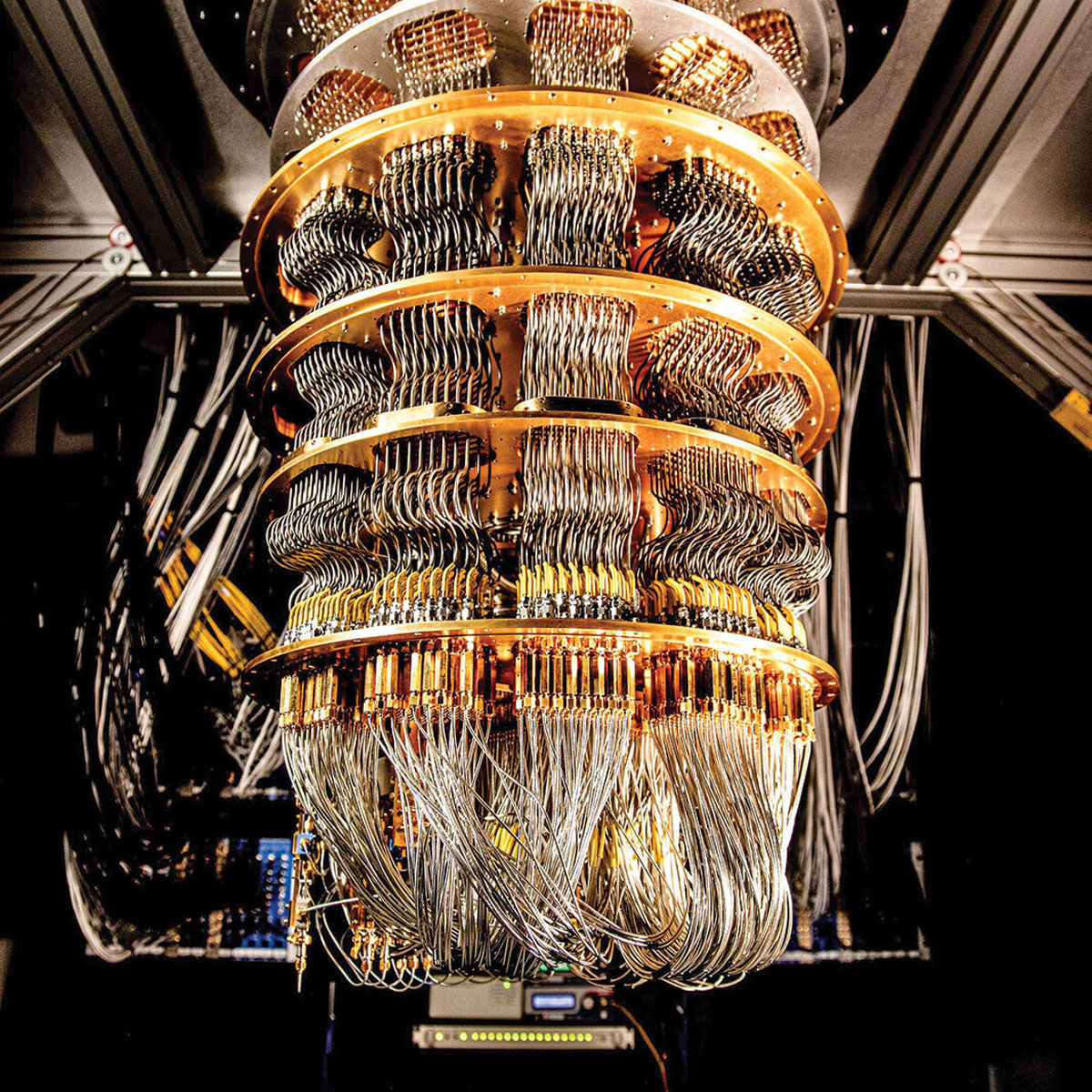
Another challenge is scalability. Building a quantum computer with thousands or millions of qubits, which is necessary for real-world applications, requires overcoming significant engineering problems. As of now, quantum computers are still in the early phase of development, with only a few companies—like IBM, Google, and D-Wave—successfully demonstrating quantum processors with a limited number of qubits.
Despite these challenges, the progress being made is remarkable. Just a few years ago, quantum computers were the stuff of theoretical physics, but now, companies and research institutions are actively racing to develop commercial quantum computers.
4. The Future of Quantum Computing: A World Transformed
If quantum computing lives up to its potential, it could fundamentally change how we interact with technology. Imagine a future where AI models can instantly learn complex patterns from huge datasets, where drug development happens in a fraction of the time, and where global security is protected by quantum-safe encryption.
But perhaps the most transformative aspect of quantum computing will be its role in solving intractable problems—challenges that are currently beyond the reach of classical computers. From optimizing global supply chains to modeling climate change with unprecedented accuracy, the possibilities are vast.
The financial sector, too, could undergo a major transformation. Quantum computing could enable more efficient portfolio optimization, more accurate risk analysis, and faster decision-making in high-frequency trading.
5. Preparing for a Quantum Future: What Does It Mean for Us?
As we move towards a quantum future, it’s important to consider the implications for society. While quantum computing will undoubtedly drive innovation, it could also disrupt industries and even job markets. The demand for professionals with skills in quantum mechanics, quantum programming, and cryptography will increase, which means that educational systems and workers will need to adapt.
Moreover, as quantum computing presents new threats to data security, individuals and organizations must prepare for a new wave of cybersecurity challenges. Governments and industries are already working on quantum encryption protocols to stay ahead of potential vulnerabilities.
Conclusion: A New Era of Technology
Quantum computing is no longer just a distant dream—it’s a fast-approaching reality that promises to change the world in profound ways. While there are still hurdles to overcome, the potential benefits are too significant to ignore. From healthcare to finance, from AI to security, quantum computing has the ability to revolutionize entire industries.
As we stand on the cusp of this quantum leap, the question remains: How will we navigate the challenges and seize the opportunities that quantum computing presents? The answers to this question will determine how quickly we can unlock the full potential of this groundbreaking technology.